Guide to 16L/4L Paint Bucket Injection Molding: From Tin Can to Plastic Bucket
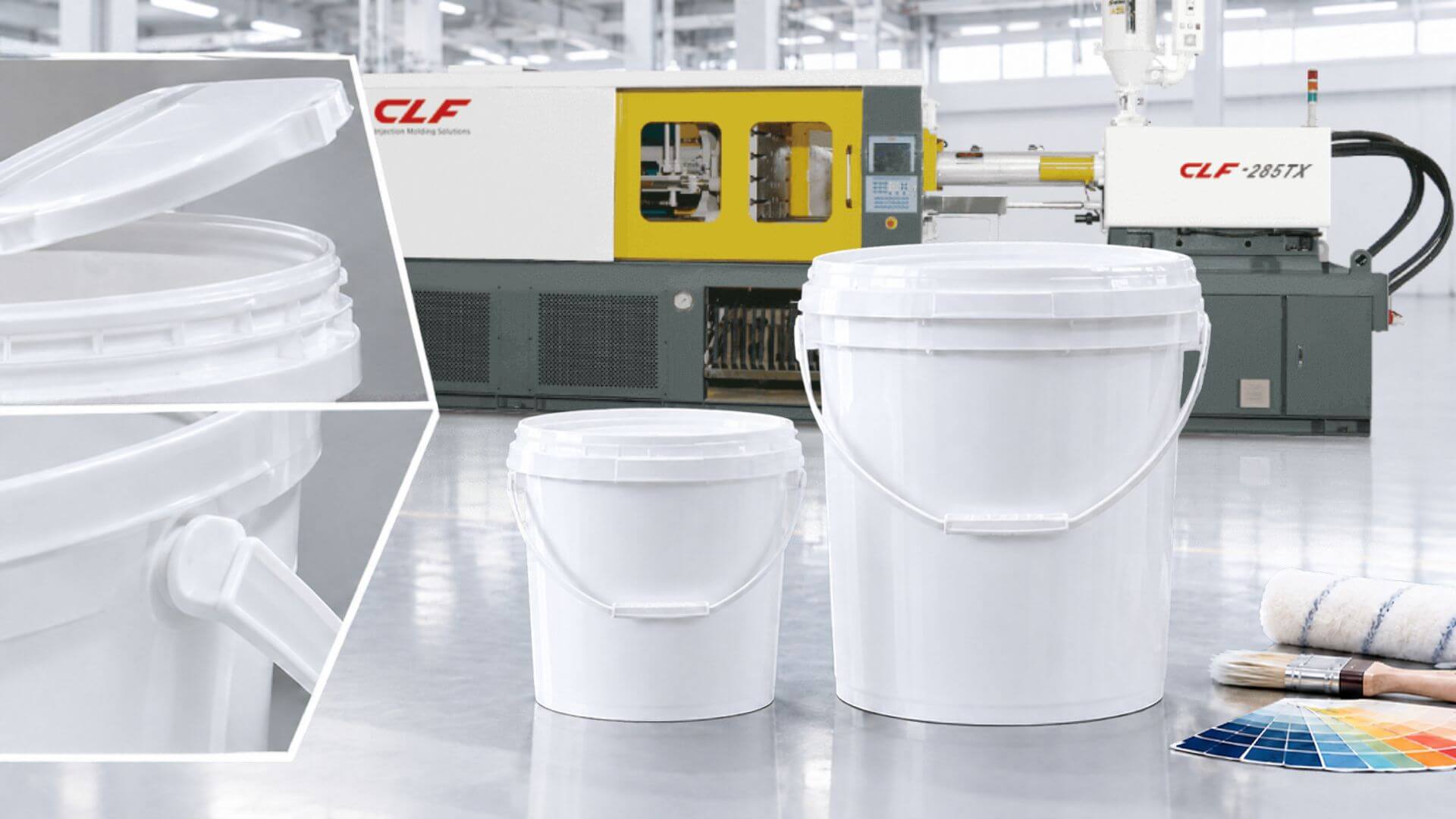
Paint and coatings packaging is shifting fast from tin cans to plastic buckets (pails) worldwide, and 16L and 4L are the two sizes buyers ask about most. The cost of getting this transition wrong is concrete: a lid that doesn't seal tightly means leaked paint across an entire shipment, a handle that isn't strong enough turns into complaints and returns that eat straight into margin, and an injection cycle that can't keep pace with a tin-can line turns the whole conversion into a hidden cost center.
This article covers the three technical thresholds a can manufacturer actually needs to clear when evaluating injection molding equipment, and how CLF turns those thresholds into a turnkey plan that's ready to run. Most equipment suppliers' websites stop at a spec sheet at this stage. But the first time a tin-can manufacturer faces this transition, what actually holds them up usually isn't "which machine has better specs" — it's "how to make this decision, and in what order."
.jpg?zxs06rhu1b)
The Market Reality Behind the Shift: Lighter Weight, Corrosion Resistance, and Lower Cost, All at Once
Over the past decade, the chemical and coatings packaging market has moved steadily in three directions — lighter weight, better corrosion resistance, and lower cost — and plastic buckets outperform tin cans on all three while fitting more easily into automated lines. Downstream customers and distribution channels increasingly treat plastic packaging as a baseline requirement, particularly in Europe, North America, and Southeast Asia, where environmental regulation and logistics costs are pushing in the same direction at the same time.
CLF has recently fielded a steady stream of inquiries from tin-can and metal-container manufacturers, nearly all converging on the same question: how to convert the two most common paint bucket sizes — 16L and 4L — to plastic injection production with the least amount of trial and error. What follows are the three technical thresholds that actually trip up manufacturers during that conversion.
The 3 Technical Thresholds Every Converting Manufacturer Has to Clear
The first time a tin-can manufacturer moves into injection molding, the part they usually underestimate isn't the capital cost of the equipment — it's where the yield ramp-up will stall. These three issues are the ones we see most often when helping packaging manufacturers make this switch.
Body-to-Lid Seal Integrity: Leak-Proofing Is the Baseline, Not a Bonus
Body-to-lid seal integrity comes down to dimensional stability during injection molding, and that depends on the machine and the mold getting it right together. On the machine side, the key variables are whether clamping force holds steady and whether injection and pressure-holding control stay precise. If clamping force is insufficient or uneven, the mold can't stay fully closed under injection pressure — even a small deviation in the roundness or flatness of the bucket rim makes it hard to pass leak testing on the first try. And once paint leaks, the cost isn't just that one bucket — it's the trust cost across the entire shipment. The mold matters just as much: the bucket rim needs reinforcing ribs so it doesn't over-soften and deform after molding and throw off lid assembly, and the body taper has to be designed right so parts release cleanly and the robot's pick-up cycle stays short.
Handle and Structural Strength: A Full 16L Bucket Has to Hold Up, Not Just Come Out of the Mold
A 16L bucket filled with paint is heavy, and the handle mounting points and body reinforcement ribs need to be molded correctly, or cracking and deformation during handling on-site turn straight into complaints and safety issues. This raises the bar on mold-flow analysis and cooling design, since the joint between handle and body is exactly where stress tends to concentrate.
Production Efficiency and Cost Balance: Plastic Has to Match the Tin Can's Speed
Traditional tin-can stamping lines run fast, and that's the benchmark most conversions overlook at first. If plastic injection relies on a single-cavity mold, output falls well short of a tin-can line. That's why most 4L buckets move to two-cavity or higher multi-cavity tooling — pairing a high-speed injection machine with multi-cavity molds to push per-cycle output up to, or past, tin-can line levels.
Once those three thresholds are cleared, the next question is which equipment actually delivers — and that's where machine selection starts to directly affect yield and throughput.
How CLF Engineers Injection Molding Solutions Built for 16L and 4L Paint Buckets
16L and 4L are both paint buckets, but the production logic behind them isn't the same: 4L is thin-walled and prioritizes throughput and cycle time, while 16L is deep-cavity and prioritizes clamping stability and mold-opening stroke. CLF configures machine selection and technical priorities differently for each:
| Category / Bucket Size | 4L Plastic Paint Bucket Production | 16L Plastic Paint Bucket Production |
|---|---|---|
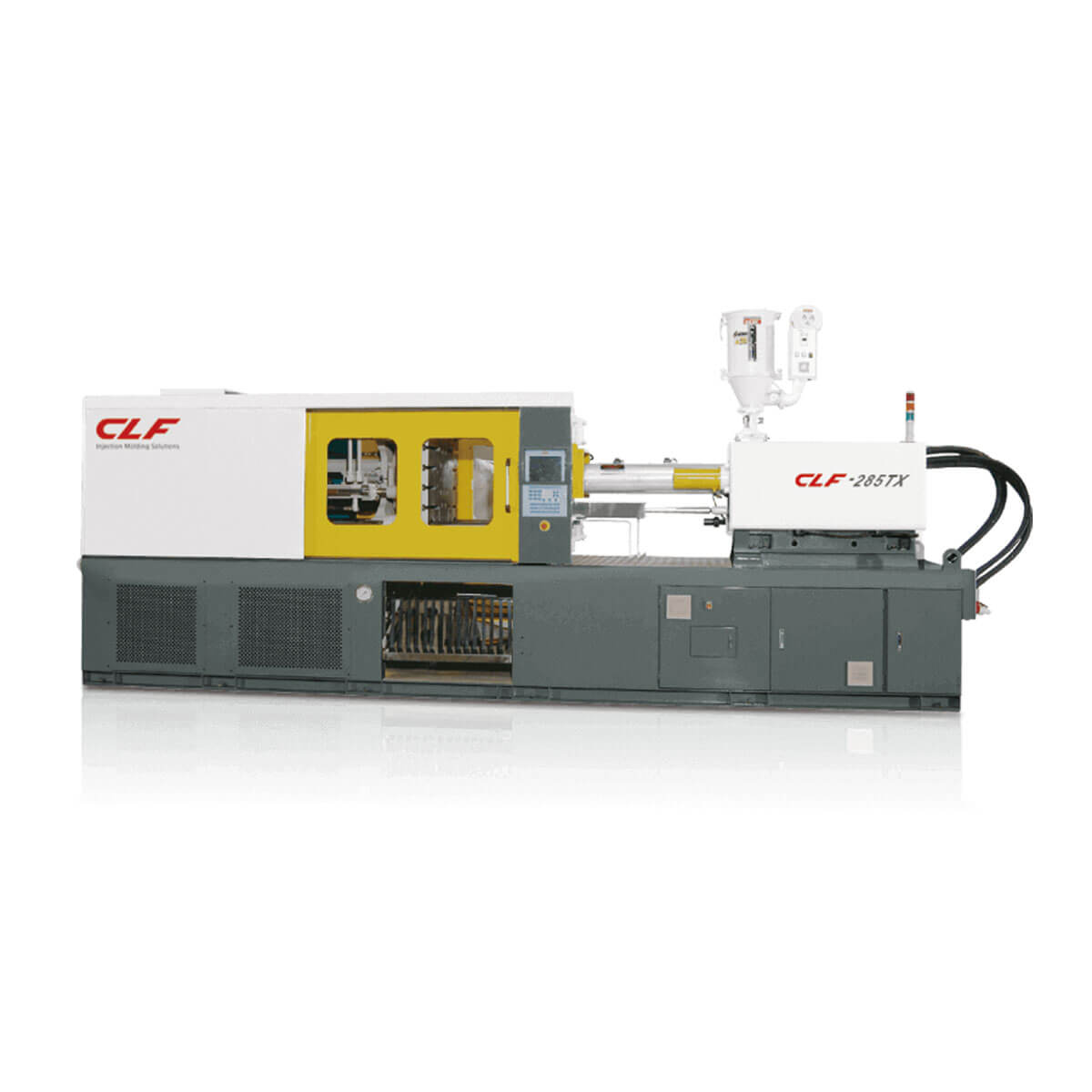
| Recommended machine series | CLF high-speed precision series (servo energy-saving models) | CLF mid-to-large two-platen or energy-saving series (CLF-T series) |
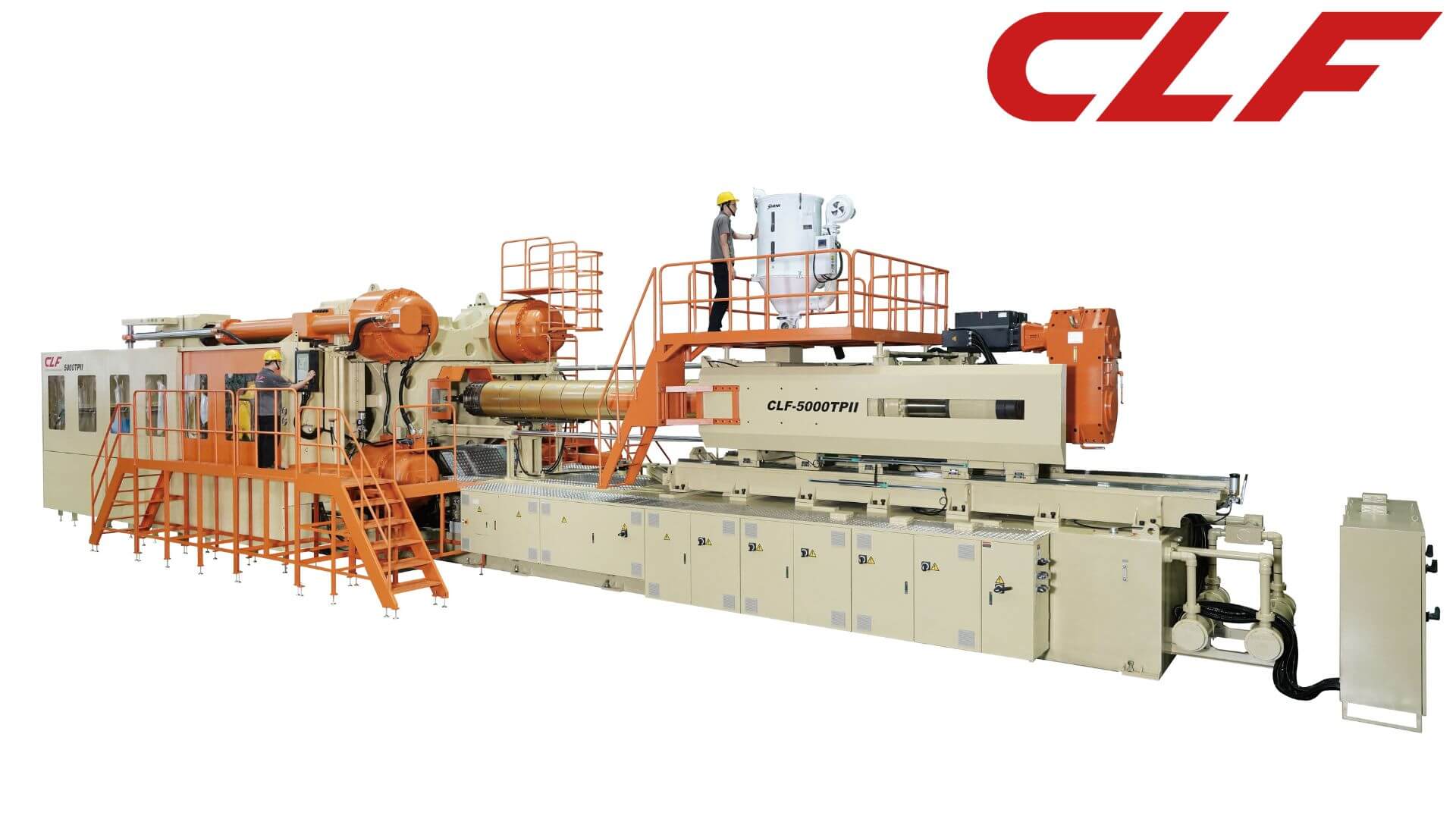
| Core technology advantage | High-speed servo system shortens cycle time to meet high-output demand; precision injection control ensures even multi-cavity filling | Stable clamping force prevents flash on large, deep-cavity parts; an extra-long mold-opening stroke customized to the product works in sync with robotic part removal and IML, shortening cycle time |
| Automation integration | Paired with high-speed robotic arms for automatic bucket ejection and handle assembly | Integrated In-Mold Labeling (IML) system combines molding and labeling in one step, improving finish quality and anti-counterfeiting |
To work out how much clamping tonnage you actually need, see How to Calculate Clamping Force for an Injection Molding Machine. If you're still weighing hydraulic, electric, or hybrid machines, Types of Injection Molding Machines breaks down the differences between the three.
Once the machine is right, what actually determines whether the conversion runs smoothly usually comes down to integration beyond the equipment itself.
Why Packaging Manufacturers Worldwide Choose CLF as Their Conversion Partner
Most manufacturers moving from tin cans to plastic have never operated injection molding equipment before, and that's the question CLF hears most often during a conversion: "Besides the machine itself, what else do we need to have in place?"
Turnkey Solutions: From Can Plant to Plastic Plant, Without Figuring It Out Alone
CLF doesn't just supply the injection machine — it coordinates with trusted mold makers and automation partners on IML, robotic arms, and automatic stacking to deliver a full turnkey solution. For a can manufacturer that has never touched plastic injection before, that means not having to track down a mold shop and an automation vendor separately and then verify they're even compatible with each other. CLF integrates all of it into one production line that's ready to run.
Smart Energy Control: Factoring Electricity Costs Into the Conversion Math
If a conversion evaluation only accounts for equipment cost, it's easy to miss a major recurring expense: electricity. CLF machines come with intelligent control systems that monitor production data in real time. Based on CLF's past experience helping packaging plants automate, servo energy-saving systems typically cut electricity costs by roughly 30–70%, with the actual figure depending on machine model and line configuration — and over time, those electricity savings often matter more to the return on a conversion than the price difference between machines.
CLF also worked with a Southeast Asian metal-container manufacturer on a conversion from a tin-can line to an automated plastic paint bucket line, resulting in an estimated 35% increase in capacity. The pattern across these cases is consistent: converting doesn't mean walking away from the production discipline built up during the tin-can era — it means carrying that discipline into a production method that's more resilient and better aligned with where the market is heading.
CLF brings decades of precision injection molding experience to packaging companies going through exactly this kind of transition, and continues to help clients get automation and energy efficiency right. If you're planning a customized injection molding line, see Customized Injection Molding Solutions. For more on how In-Mold Labeling fits into a production line, see The Comprehensive Guide to In-Mold Labeling.
Frequently Asked Questions
Q1: Does converting from tin cans to plastic paint buckets require rebuilding the plant?
Not necessarily. Most conversions add a plastic injection line inside an existing facility rather than rebuilding it entirely. What matters is whether the plant's power and compressed-air infrastructure can support the injection machine, and whether the floor plan has room for the machine plus its automation equipment. CLF evaluates this against actual site conditions rather than assuming a full rebuild is required.
Q2: How do you make sure a 16L bucket survives drop testing?
The keys are even wall-thickness distribution and whether the pressure-holding phase during injection lets the material fill completely, reducing internal stress. Precise clamping-force control combined with a tuned pressure-holding curve lets a 16L bucket stay lightweight while still meeting the impact resistance needed to pass drop testing.
Q3: Can the same injection machine produce both 4L and 16L buckets?
Technically, yes — but it depends on whether the machine's clamping-force range and shot size can handle both sizes. Most packaging manufacturers decide based on production scheduling, and when CLF plans a line, it factors in mold-change time and tooling management cost to help the client determine whether sharing one machine or running separate ones makes more sense.
Start Planning Your 16L/4L Paint Bucket Injection Molding Conversion
Moving from tin cans to plastic buckets tests more than capital investment — it tests whether seal integrity, structural strength, and production efficiency can all be met at once. CLF's turnkey planning and smart energy control help packaging manufacturers cut the trial-and-error cost of that conversion to a minimum.
If you're evaluating a production plan for 16L or 4L paint buckets, fill out our inquiry form to talk with a CLF specialist about your production plan — just leave your name, company name, and contact details, and let us know your company type and what you're running into. CLF will route your inquiry to the right technical contact based on your production setup.