
Plastic Pallet Injection Molding Machines
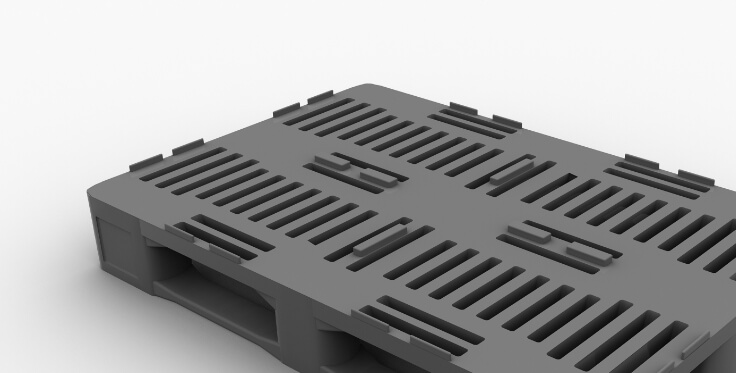
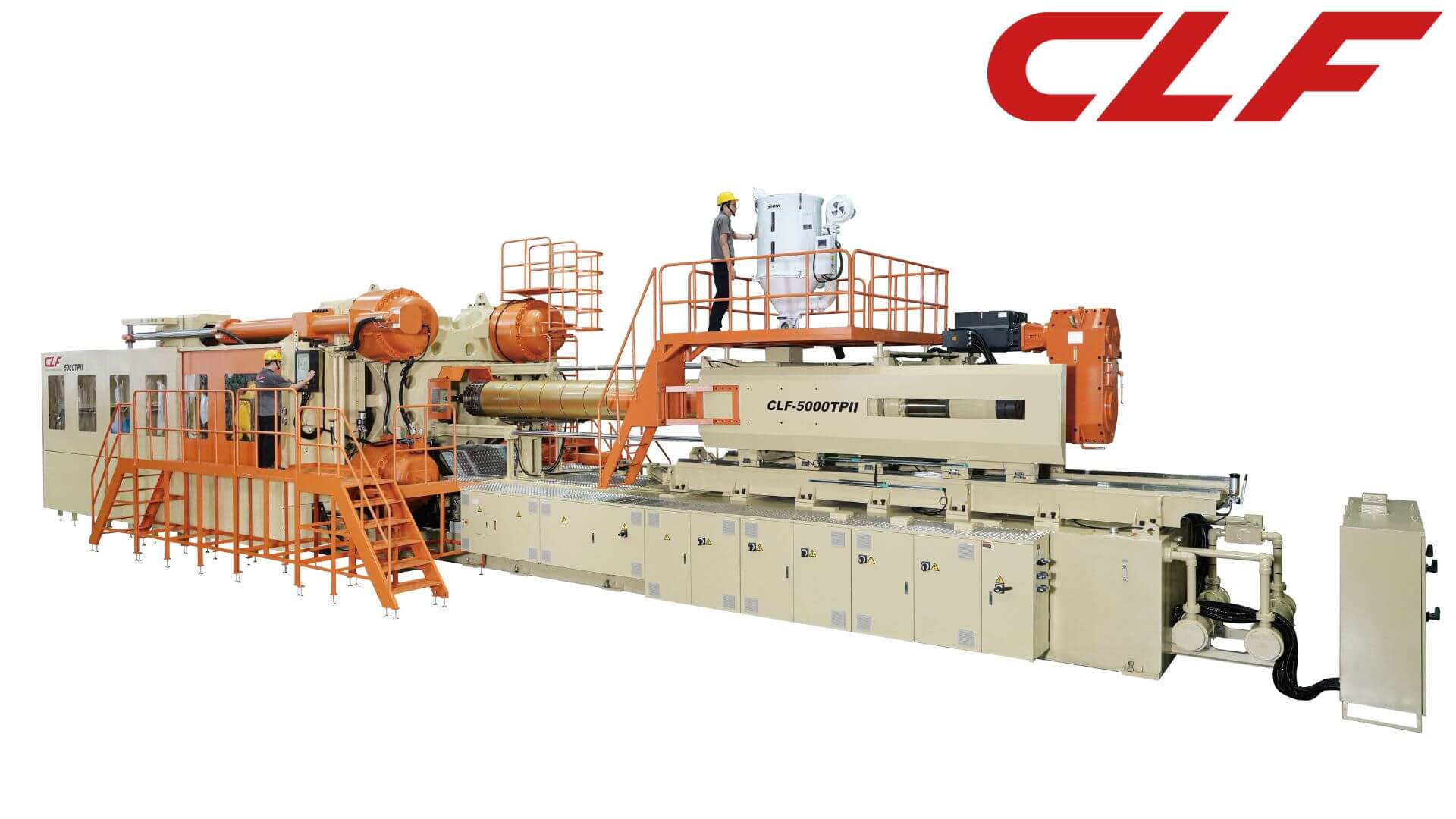
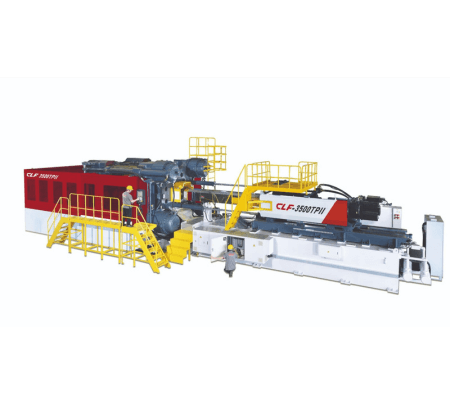
A plastic pallet injection molding machine is a large two-platen press that melts polyolefin resin and fills a full-size pallet mold in a single shot. The machines we build for pallet production run from 2,500 to 3,500 tons of clamping force, and the ones that disappoint their owners are almost always sized on shot weight alone. Cooling, not injection, is what sets a pallet cycle: on one Taiwanese line, 100 seconds of a 150-second cycle were cooling before we rebuilt the thermal path.
Establish three things before you request a quote:
- Finished pallet weight and dimensions
- Single- or double-sided construction
- The share of post-consumer regrind you intend to run
All three change the machine specification, and none of them costs anything to establish.
How Much Clamping Force Does a Pallet Mold Need?
Clamping force for a pallet mold follows the projected area of the part, not its weight. The method is the same one we use for any large part:
Clamping Force (tons) = Clamping Force Constant (Kp) × Projected Area (sq in) × Safety Factor
A standard 1,200 × 1,000 mm pallet presents about 1,860 square inches of projected area, which is roughly eighteen times the 100 square inches in the worked example in our guide to calculating injection molding tonnage. That single input is why pallet work starts in the thousands of tons rather than the hundreds.
Two variables decide the rest: the constant for your resin and the safety factor your part geometry needs. We do not publish a single figure for either, because on a pallet both move with the resin grade, the share of regrind and the deck design. A double-sided pallet raises both, since the deck structure fills from more gates at once and the ribbed sections are less forgiving of short shots. We confirm the constant and the margin from your pallet drawing when we size the machine.
The pallet types most buyers produce fall into three machine classes:
| Machine | Clamping force | Pallet size (mm) | Finished weight | Pallet type |
|---|---|---|---|---|
| 2500TPII | 2,500 tons | 1,200 × 800 (Euro pallet) | approx. 10–15 kg | General-purpose |
| 3000TPII | 3,000 tons | 1,200 × 1,000 | approx. 15–25 kg | — |
| 3000TPII | 3,000 tons | 1,100 × 1,100 | approx. 10–15 kg | Standard |
| 3000TPII | 3,000 tons | 1,100 × 1,100 | approx. 18–22.5 kg | Heavy-duty reinforced |
| 3500TPII | 3,500 tons | 1,200 × 1,000 | approx. 15–25 kg | — |
| 3500TPII | 3,500 tons | 1,100 × 1,100 | approx. 10–15 kg | Standard |
| 3500TPII | 3,500 tons | 1,100 × 1,100 | approx. 18–22.5 kg | Heavy-duty reinforced |
Reference installation: an 11 kg double-sided pallet on a 90-second cycle, molded on a 3500TPII.
Treat the table as a starting point, not a limit. As long as the mold dimensions fit within the platen and tie-bar envelope, we can match the injection unit to the shot the pallet needs. That is why the 3000TPII and 3500TPII cover the same pallet sizes: the choice between them follows the mold's size and design, not the pallet footprint.
We also do not attach a cycle time to these classes. The same pallet runs at different cycles on different molds and auxiliary equipment, so we configure the machine around the output you need rather than promise a figure in advance.
If you are still deciding between platform sizes rather than pallet sizes, our three tips for selecting a large injection molding machine covers the wider TPII and TWII ranges.
Tonnage gets a machine that closes. It does not get a cycle time, and that is where most pallet programs lose money.
Cooling Decides Pallet Cycle Time, Not Injection Speed
On a thick-section pallet, cooling consumes about two-thirds of the cycle before anyone touches the thermal design. A pallet deck is a large mass of polyolefin with ribs that hold heat, so the press spends most of its cycle waiting rather than working.
One Taiwanese pallet producer came to us running a 150-second cycle, of which 100 seconds was cooling. We addressed the heat path rather than the injection unit:
- Beryllium copper inserts in the sections that held heat longest
- A redesigned cooling pipeline through the mold
- A linear rail material storage system, which shortens the recovery portion of the cycle
- Electric material storage, which cut power draw by more than 25%
The result was an 11 kg double-sided pallet in 90 seconds on a 3500TPII, against the 150-second baseline. That is a 40% cycle reduction achieved without raising injection pressure or tonnage.
Cooling explains the cycle. The clamping architecture explains whether the mold fits at all.
Two-Platen or Three-Platen for a Pallet Mold?
For a full-size pallet mold, a two-platen injection molding system is usually the right architecture, and platen area decides it before tonnage does. A 1,200 × 1,000 mm pallet mold needs clear space between the tie bars that a three-platen machine of the same clamping force does not always give, and it needs that space in a shorter machine footprint than most pallet plants can spare.
The second reason is specific to how a pallet cycle is spent. Three-platen (toggle-type) machines are quicker on dry cycle, which is a real advantage on thin-walled, fast-cycling parts. On a pallet that advantage is a small share of the total, because the cycle is dominated by cooling: 100 of 150 seconds on the line we rebuilt. Buying dry-cycle speed to mold pallets pays for a benefit the part cannot use.
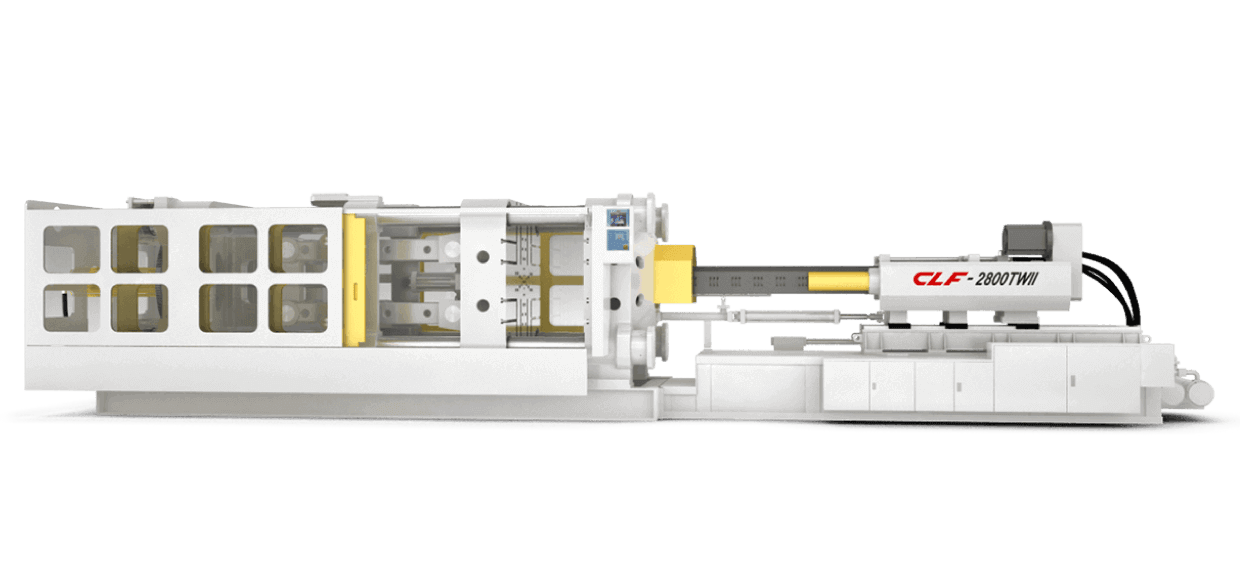
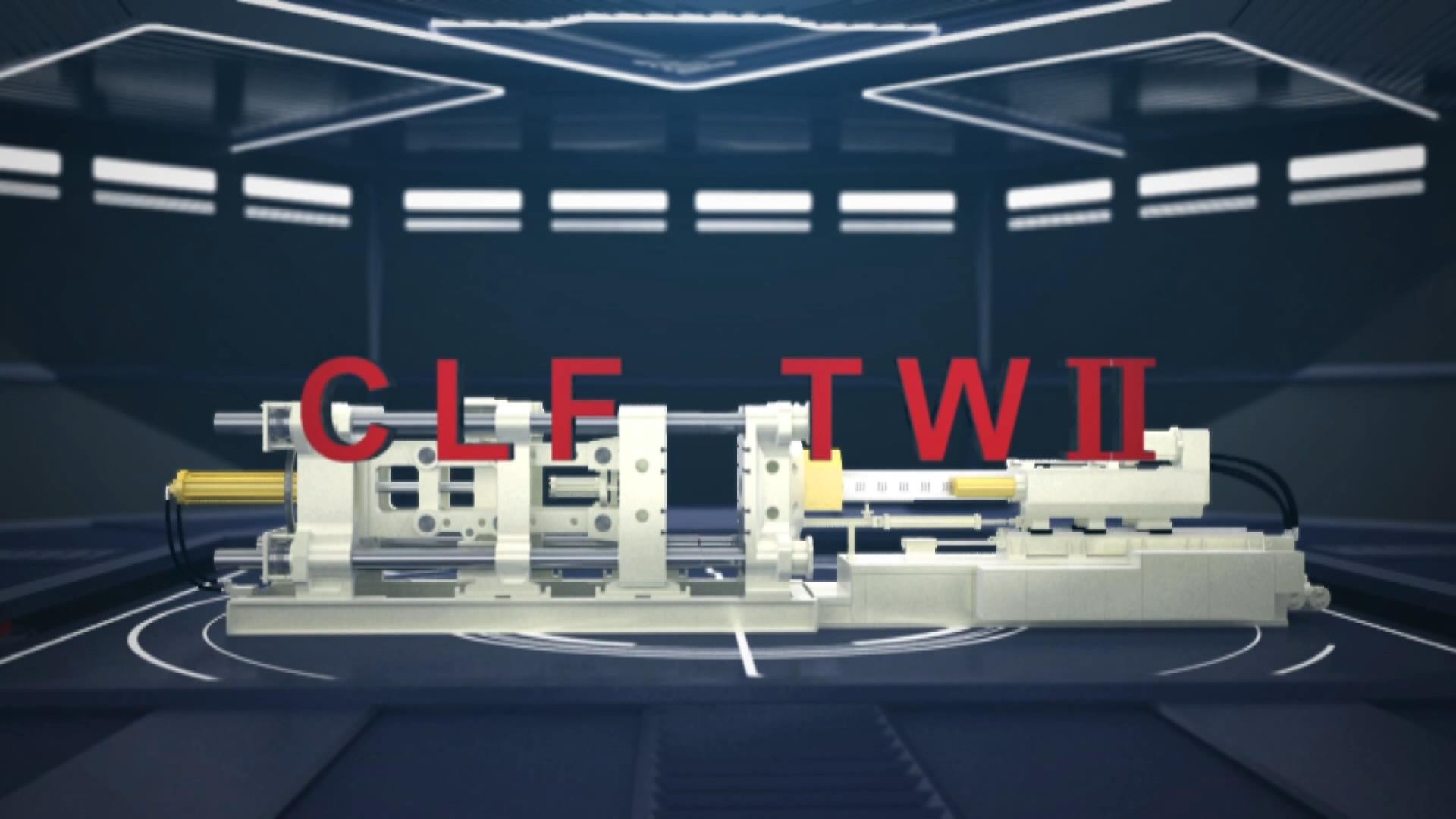
That does not disqualify three-platen machines from pallet work. Where mold changes are frequent and pallet sizes vary, their mold-handling access is worth more than platen width, which is why we build the TWII outward-toggle injection molding series alongside TPII.
For the general comparison across all part types, including precision, maintenance and mold handling, see our breakdown of two-platen versus three-platen injection molding machines. This section covers only what changes when the part is a pallet.
Screw and Barrel Design for HDPE, PP, and Regrind
Post-consumer regrind changes plasticizing before it changes anything else. High-density polyethylene (HDPE) and polypropylene (PP) flake arrives at inconsistent bulk density, carries a wider melt-index spread than virgin pellets, and loads the screw unevenly as a result. A screw specified for virgin resin will surge on the same material.
Our pallet machines are specified around that problem:
- Barrel sets: D175 and D200 (175 mm and 200 mm screw diameter)
- Screw type: high-efficiency barrier screw
- Compression ratio: 2.6
- L/D ratio: 23–24
A barrier screw adds a second flight that separates the melt pool from the solid bed, which keeps unmelted flake from being carried forward with the melt. On regrind, where particle size and bulk density vary from one batch to the next, that separation is what keeps melt quality steady from shot to shot. The 2.6 compression ratio and 23–24 L/D are the combination we run on pallet-grade polyolefin.
What the screw handles, the process still has to prove on a full production run.
Running 100% Post-Consumer Regrind
Pallets are the most forgiving high-volume application for recycled polyolefin, which is why they are where most recycled-content programs start. One American manufacturer builds its entire pallet line on 100% recycled post-consumer plastic using 2500TPII, 3000TPII and 3500TPII machines. After changeover they recorded:
- Defect rate down by more than 45%
- Cycle time improved by 30%
- Energy consumption down 20%
Those numbers came from a machine and mold specified for regrind from the start, not from a virgin-spec line later fed with flake.
What Drives the Cost of a Plastic Pallet Injection Molding Machine?
We do not publish a price list for pallet machines, because two machines in the same tonnage class can be quoted very differently once the configuration is settled. The quote is shaped by six factors, and only the first is the press itself:
- Clamping force — the 2,500 to 3,500 ton band covers most pallet work
- Energy-saving options — components such as far-infrared heaters lower running cost and change the initial price
- Machine customization — for example, a side mold-loading design
- Automation — robotic pallet extraction is standard practice at this part size, and the automation planned around the cell is a major variable
- Material handling — regrind lines need different drying and feeding than virgin pellet lines
- Mold — a double-sided pallet mold is a separate capital item
The fastest route to a realistic figure is to send us your pallet drawing, target output and recycled-content share. We quote the configuration that fits the job rather than a list price.
Frequently Asked Questions
The questions below are the ones buyers actually put into Google before they contact a supplier, so they are answered here in the same terms.
Q1: How much does a plastic pallet injection molding machine cost?
There is no single list price. The quote depends on the clamping force, energy-saving options such as far-infrared heaters, customization such as side mold loading, the automation planned around the machine, and the material-handling equipment for regrind. Send us your pallet drawing and target output for a configured quote.
Q2: What tonnage do I need for a 1,200 × 1,000 mm pallet?
A 1,200 × 1,000 mm pallet presents about 1,860 square inches of projected area. For pallets of that size weighing roughly 15–25 kg, we recommend the 3000TPII or the 3500TPII, and the choice between them depends on the size and design of the mold rather than the pallet itself.
Q3: Can I mold pallets from 100% recycled plastic?
Yes. One of our U.S. customers runs its entire pallet program on 100% post-consumer recycled material, with defect rates more than 45% below its previous line.
Q4: How fast can a pallet be molded?
There is no single figure, because cycle time depends on the mold design and the equipment around the press. As a documented reference, one Taiwanese producer molds an 11 kg double-sided pallet in 90 seconds on a 3500TPII, down from a 150-second baseline. Cooling design, not injection speed, is what moved that number.
Partner with CLF for Your Plastic Pallet Injection Molding Projects
Already running a pallet line and looking to shorten the cycle rather than replace the press? Our guide to optimizing plastic pallet production covers the three levers available without new equipment.
Otherwise, send us your pallet drawing with the finished weight and the recycled-content target. We will size the clamping force, the mold layout and the cooling circuit together, and tell you which of the three TPII classes fits before you commit to a mold. Contact Us Today!
_pic.png)