
Multi-color Injection Molding: Process, Benefits & Machine Selection Guide
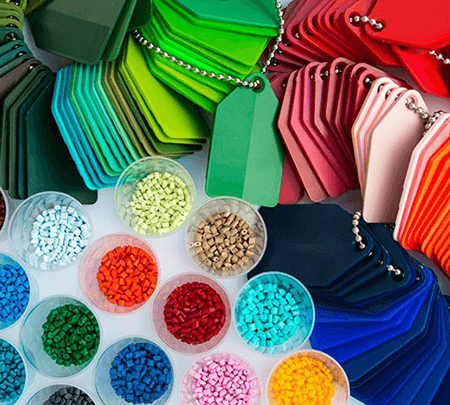
As the plastic industry advances, multi-color injection molding has become one of the most important technologies for manufacturers seeking to produce innovative, high-quality products in a single production cycle. Whether you are evaluating this process for the first time or selecting a machine to support a new product line, this guide covers everything you need to know — from how the process works to the three critical factors that define machine selection.
What Is Multi-color Injection Molding?
Multi-color injection molding — also referred to as twin-shot molding, two-shot molding, or multi-component injection molding — is a manufacturing process in which two or more colors or materials are injected into a mold within a single, continuous production cycle. The result is a finished part that integrates multiple colors, textures, or material properties without any secondary assembly or painting operations.

The technology is now widely used across industries that demand visually complex or functionally composite parts:
- Automotive: tail lights, interior trim panels, dashboard components
- Consumer electronics: soft-touch housings, two-tone casings, grip surfaces
- Medical devices: ergonomic instruments requiring rigid structure with soft-touch zones
- Household appliances and power tools: handles combining hard plastic bodies with rubber grips
Unlike traditional injection molding — which produces single-material, single-color parts — multi-color injection molding achieves all of this within one machine cycle, making it both more efficient and more dimensionally consistent than secondary-process alternatives.
How the Multi-color Plastic Injection Molding Process Works
Understanding the process is foundational to making the right machine and mold decisions. Multi-color injection molding does not simply replicate standard injection molding with an additional unit — it requires precise coordination between the mold design, the rotary mechanism, and the injection sequence.
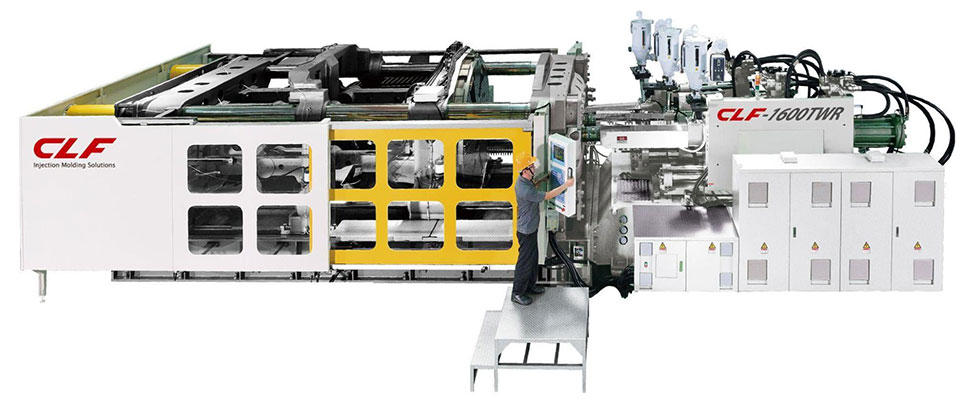
The following four stages describe how the process operates, with reference to CLF's TWR/TWIIR series machine architecture. Depending on your factory layout, choosing between Two-Platen vs. Three-Platen designs can further optimize your space efficiency.
| Step | Stage | CLF TWR/TWIIR Technical Detail |
|---|---|---|
| 1 | First Shot Injection | The base material (typically rigid plastic) is injected into the primary cavity, forming the product's structural skeleton. CLF's TWR/TWIIR series supports multiple injection unit configurations (2 to 6 units), allowing flexibility across different base materials and shot sizes. |
| 2 | Mold Rotation via Rotary Table | The mold rotates precisely — typically 180° for two-color, or 120° for three-color — using CLF's integrated Rotary Table. The Rotary Table's positioning precision directly governs part quality: insufficient precision causes flashing or misalignment between layers. CLF's rotary mechanism is engineered for repeatable accuracy to maintain tight tolerances across high-volume production runs. |
| 3 | Second (or Multi) Shot Injection | The second material or color is injected into the remaining cavity space. Residual heat from the first shot promotes physical or chemical bonding at the material interface, creating a seamless, high-strength join. For co-injection variants (available on CLF TWIIR series), a specially designed nozzle delivers two materials simultaneously to create marble, striped, or layered visual effects. |
| 4 | Cooling & Ejection | The completed multi-color part cools within the mold before single-cycle ejection. Because both materials are molded in one uninterrupted cycle — rather than assembled post-production — dimensional stability and bond strength are substantially higher than secondary-process alternatives. CLF's machine design ensures cooling efficiency is maintained even when rotary mechanisms are in operation. |
Process Variants: Separated Injection vs Co-injection
Two principal process architectures are used in multi-color injection molding, and the choice between them is determined by the product's design requirements:
Separated Injection (Two-Shot / Bi-injection)
Each color or material is injected independently into its own mold cavity. This process produces sharp, clearly defined color boundaries and is well-suited for products that combine different material types — for example, a rigid polycarbonate structural body overmolded with a TPE soft-touch grip surface. CLF's TWR series is designed for separated injection applications.
Co-injection / Sandwich Injection
Two materials are delivered simultaneously through a specially designed nozzle, allowing one material to encapsulate or blend with the other. This produces visual effects such as marble patterns, striped finishes, or layered cross-sections. Co-injection is also used to reduce material costs by using recycled or lower-grade resin as a core material enclosed within a high-quality outer skin. CLF's TWIIR series supports co-injection configurations.
Key Benefits of Multi-color Injection Molding
Manufacturers across industries adopt multi-color injection molding for three primary reasons:
-
Production Efficiency
Multi-color parts are completed in a single machine cycle, eliminating the need for secondary painting, coating, or assembly operations. This directly reduces labor costs, cycle time, and the number of production steps.
-
Consistent Part Quality
Because color and material interfaces are formed in-mold rather than assembled post-production, dimensional tolerances are tighter and bond strength between materials is significantly higher. Assembly-related defects — misalignment, adhesive failure, surface contamination — are eliminated by design. Furthermore, implementing Digital Solutions like IoT and AI can significantly improve precision and reduce defect rates in complex multi-shot processes.
-
Design and Material Freedom
A single part can incorporate multiple colors, contrasting textures (rigid + soft-touch), or functional material zones in any geometry the mold allows. This design freedom supports product differentiation in competitive markets without adding manufacturing complexity.
3 Factors to Consider Before Purchasing a Multi-Color Plastic Injection Molding Machine
Understanding the process is the first step — but the machine you choose ultimately determines whether that process runs at its full potential. Virtually, the injection molding process remains the same as traditional injection molding. However, the integration of additional injection units is required. Commonly the number of additional injection units can range from 2 to 6, one for each material or color. Since there are more demands on multi-color production, there are 3 critical factors you need to evaluate before purchasing equipment.
-
Diversity of Product Design
Due to multi-color injection molding technology being widely adopted, the process, cost and quality of colorful plastic products have improved significantly. However, with the growth of the plastic industry, many companies develop diverse product designs to strengthen their business. In order to make innovative and visually distinctive products — whether two-separated color, mixed color, strip pattern, or special multi-color effects — many kinds of colorful products have emerged.
Moreover, in specific industries, multi-material is also a common requirement. For example, car lights require not only multi-color but also multi-material production. Different types of multi-color/material products require different injection molding processes to support. Based on the product type, characteristics of material, temperature, injection speed and pressure are all factors to consider and adjust — which has led to multiple injection unit designs. Therefore, clearly identifying your product design requirements is the essential first step.

-
More Complicated Mold Design
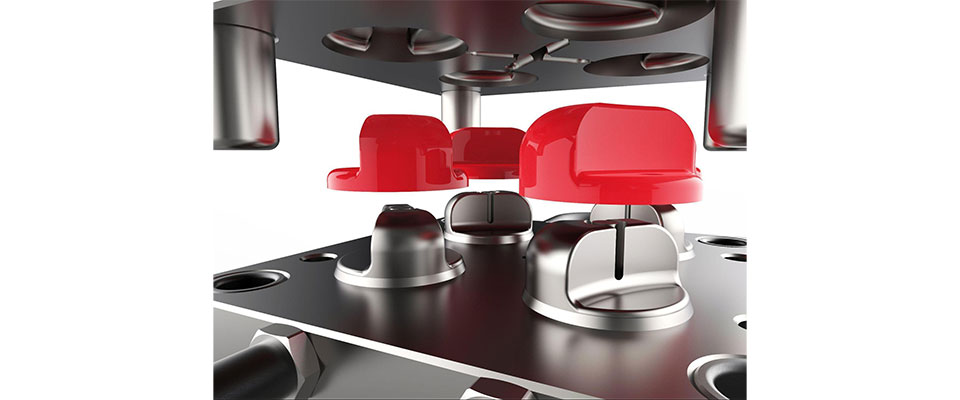
The design of molds for multi-color products tends to be significantly more complex than standard tooling. As mentioned, there is a wide variety of colorful product configurations. When designing the mold, it is crucial to consider not only the product's shape but also the injection layers and the rotation path of the mold between shots.
Since mold design is closely tied to the injection molding machine and process, compatibility between the two is essential. Misalignment leads to increased production costs and higher defect rates. Based on our experience, the more comprehensive the understanding of the mold design prior to machine construction, the better the alignment between mold and machine. If you are planning to establish a new product line, we strongly recommend engaging in early discussions with your machine vendor regarding mold design to ensure the system is optimized as a whole.
-
Machine Structure and Injection Unit Design
The structure of the machine and the design of its injection units are the factors that most directly define the limits of the multi-color injection molding process. A machine's hardware does not merely support the process — it determines what the process can and cannot achieve.
For example, the positioning precision of the Rotary Table is a critical parameter: if rotary accuracy falls below the tolerance required by the mold design, flashing (material overflow at parting lines) will occur in high-precision applications. This means that when evaluating a machine, the rotary path, positioning repeatability, and cooling efficiency must all be assessed in relation to the specific process requirements — not in isolation.
Overall, machine structures can be categorized into two types: separated injection and co-injection. Separated injection — also known as two-shot or bi-injection — uses two independent injection units that fire sequentially. It is standard for products with clearly defined color zones. A rotary table is commonly added to ensure mold positioning precision between shots.
Co-injection design is used for mixed colors, patterns with special multi-color effects, or layered products. Two injection units with a specially designed injection nozzle can produce distinct visual effects, such as marble or striped patterns. Although there are defined machine and injection unit configurations available, the optimal setup must account for your specific product design, mold design, and cost parameters. Identifying the most valuable configuration for your application is essential. To ensure your selected machine can handle the required clamping force, refer to our Step-by-Step Guide on How to Calculate Injection Molding Tonnage.
Wide Range of Applications
Multi-color plastic injection molding has a wide range of applications across industries where performance, aesthetics, and production efficiency must coexist.
Automotive Industry
One of the most common applications is in the automotive industry, where multi-color parts are used in car interiors, exteriors, and lighting systems. The ability to combine optical-grade polycarbonate with colored ABS in a single cycle is critical for tail light and headlamp assemblies. For high-precision requirements, see how our TPIIR series injection molding machine is optimized for automotive lighting.
Consumer Goods Industry
Products such as toys, household appliances, and electronic device housings benefit from multi-color molding for both aesthetic differentiation and ergonomic function — for example, combining a rigid structural shell with a soft-touch grip zone.
Healthcare Industry
Multi-color injection molding is used in the healthcare industry for producing medical devices and instruments that require both structural rigidity and soft-touch grip surfaces, while meeting strict material biocompatibility requirements.
Overall, multi-color plastic injection molding has become a critical technology in many industries where demand for high-quality, visually distinctive, and functionally composite products continues to grow.
Frequently Asked Questions: Multi-color Injection Molding
Q: What is the multi-color injection molding process?
A: Multi-color injection molding is a manufacturing process where two or more materials or colors are injected into a mold in sequential or simultaneous shots within a single production cycle. The result is a finished part with multiple colors, textures, or material properties — without secondary assembly.
Q: What are the main benefits of the multi-color plastic injection molding process?
A: Three key benefits: (1) Efficiency — single-cycle molding eliminates secondary painting or assembly operations; (2) Quality — bonded-in-mold interfaces reduce assembly errors and improve structural integrity; (3) Design freedom — a single part can incorporate multiple colors, materials (e.g., rigid + TPE soft-touch), or visual effects such as marble patterns.
Q: What is the difference between separated injection and co-injection in multi-color molding?
A: Separated injection (two-shot/bi-injection) injects each material or color independently into distinct cavities, producing sharp color boundaries. It is suited for products requiring clearly defined color zones or combinations of different materials (e.g., hard plastic + rubber grip). Co-injection uses a specially designed nozzle to deliver two materials simultaneously, creating blended visual effects such as marble or striped patterns. CLF's TWR series supports separated injection; the TWIIR series adds co-injection capability.
Q: How does the Rotary Table affect multi-color injection molding precision?
A: The Rotary Table is the mechanism that repositions the mold between injection shots. Its positional accuracy directly determines whether the second shot aligns correctly with the first. Poor rotary precision leads to flashing (material overflow at parting lines) or misaligned color boundaries. CLF's integrated Rotary Table is engineered to maintain consistent positioning accuracy across extended production runs. To protect this long-term accuracy, follow our Comprehensive Guide to Injection Molding Machine Maintenance.
Q: How many injection units does a multi-color injection molding machine need?
A: The number of injection units corresponds to the number of colors or materials in the finished part. CLF's TWR/TWIIR series supports configurations ranging from 2 to 6 injection units, accommodating products from standard two-color consumer goods through to complex multi-material automotive components.
Explore CLF Multi-Color Plastic Injection Molding Machines
If you are ready to take your multi-color plastic injection molding process to the next level, we invite you to explore CLF's TWR/TWIIR series. These machines are designed specifically for manufacturers looking to produce high-quality parts in a variety of colors and materials.

Our TWR/TWIIR series offers Rotary Table, separated injection, and co-injection as selectable configurations — covering the full range of multi-color process requirements from standard two-color consumer parts through to complex multi-material automotive components.
- TWR Series: Rotary Table with separated injection — for sharp color-boundary applications
- TWIIR Series: Adds co-injection capability — for marble, striped, and layered-effect products
- 2 to 6 injection unit configurations available
If you have any questions or would like more information on how our machines can support your production requirements, please contact us.
Read More:
What are the Essential Features of PET Preform Injection Molding Machine? — Learn how specialized systems achieve the high-speed and stability required for PET production.
The Comprehensive Guide to In-Mold Labeling (IML) — Explore another cutting-edge technology that combines labeling and molding to maximize production efficiency.
Maximizing Efficiency and Quality in Car Bumper Molding — Beyond lighting, see how the right machine choice optimizes the production of large-scale, high-quality exterior parts.